

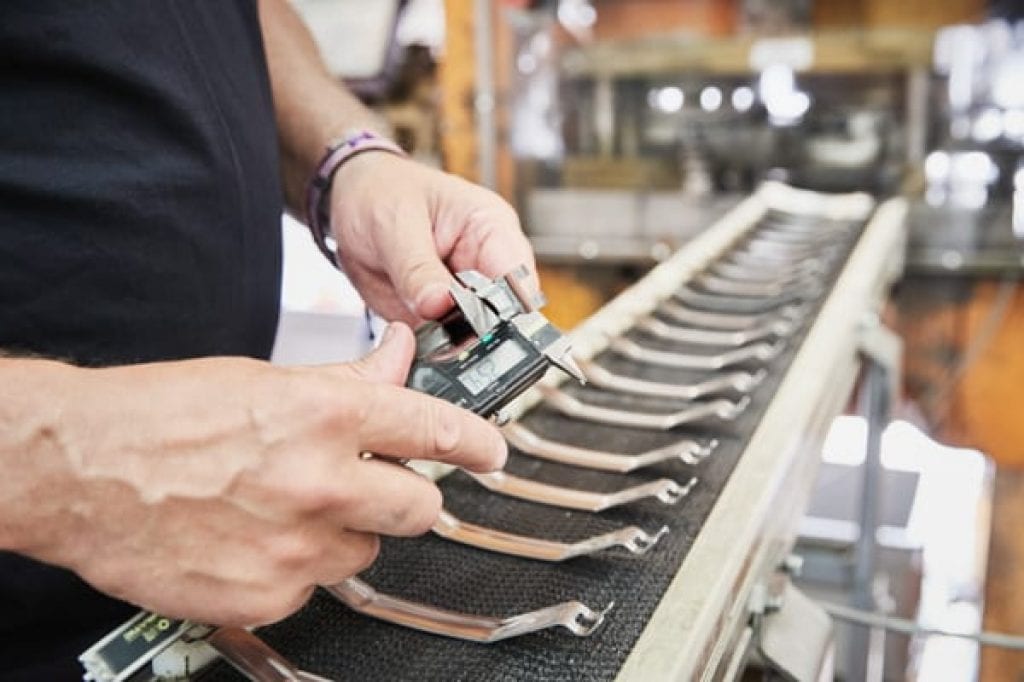
Metal stamping – also known as metal pressing – involves shaping flat metal sheets into precise, easily repeatable components. From clips and brackets to bushings and locking rings, stamping plays a crucial role in high-volume production across a wide range of industries, from automotive to electronics.
Manufacturers rely on metal stamping and pressing for its consistency, speed, and cost efficiency at scale. Once they establish tooling, manufacturers can produce stamped components within tight tolerances across long production runs.
As a leading manufacturer of springs, pressings and stampings, Lesjöfors combines deep technical expertise with qualified tool development and one of the broadest material ranges in the industry. In this article, we explain what metal stamping is, how the process works, where it is used, and which materials are involved. We also outline why stamping remains one of the most efficient metal forming processes available.
What is metal stamping?
Metal stamping is a manufacturing process that forms flat sheet metal into defined shapes using a stamping press and precision tooling. During pressing, controlled force is applied to the material, causing it to bend, cut, pierce, or form into the required shape.
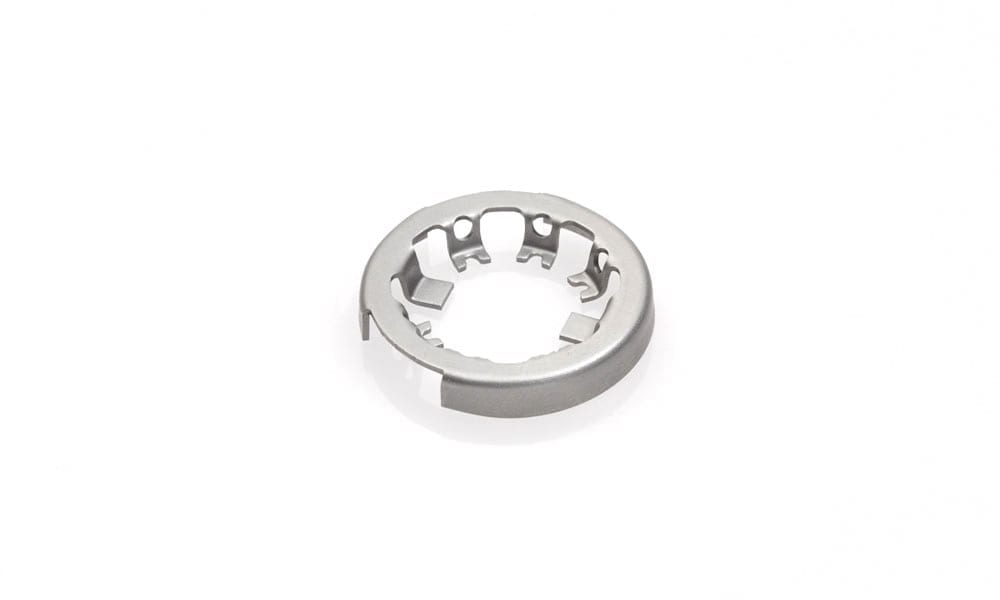
The process is designed for efficiency and repeatability. Once tooling is set up, stamped parts can be produced consistently with minimal variation, making metal stamping ideal for components with strict dimensional and functional requirements. Common examples include bending parts, brackets, bushings, circlips, locking rings, and snap rings.
Metal stamping and pressing is widely used across automotive, industrial, electronics, and medical applications. In these sectors, manufacturers choose metal stamping for production efficiency, reliability, long service life, and predictable product performance.
How metal stamping and pressing works
While systems vary in complexity, essentially, metal stamping involves feeding flat sheet metal into a stamping press, where tooling shapes the material. Depending on the design, the metal may be fully formed in a single stroke or progressively shaped across multiple operations, before the finished stamped part exits the press.
The success of the process depends on how well the press, tooling, and materials match. Controlling pressing force, tool geometry, and material behavior is important to avoid distortion, cracking, or inconsistent results.
Stamping presses and tooling
Stamping typically uses mechanical or hydraulic presses. Mechanical presses deliver fast, repeatable strokes that are well-suited to high-volume production of stamped parts such as clips, washers, and thin-gauge pressings. Hydraulic presses apply force more gradually and with greater control, which is better for deeper forming operations and thicker materials.
Tooling defines the final shape and quality of the pressing. Precision-machined dies guide the metal through forming, piercing, bending, and cutting operations. In more complex applications, multislide presses allow tools to form intricate parts in multiple directions within a single cycle.
Core stamping and pressing operations
Metal stamping includes several forming operations that may be used individually or in combination:
- Blanking cuts flat shapes from sheet metal
- Piercing creates holes or internal features
- Bending forms angles and flanges
- Forming reshapes the material without cutting
- Coining applies localized high pressure to achieve fine detail or controlled thickness
Progressive and transfer stamping
Progressive and transfer are two common types of metal stamping processes.
In progressive stamping, a continuous strip of metal moves through multiple stations within a single tool. Each press stroke completes a different operation, gradually forming the finished part. This method is ideal for high-volume production of stamped components such as circlips, locking rings, and thin-gauge pressings that require tight tolerances.
Transfer stamping, on the other hand, moves individual blanks between stations. While slower, it allows more flexibility for larger or deeper components, and is commonly used for deep drawn parts where uniform wall thickness, smooth surfaces, and precise geometry are essential.
Common metal stamping applications
A wide range of industries use metal stamping for reliable, repeatable metal components.
Automotive and transportation
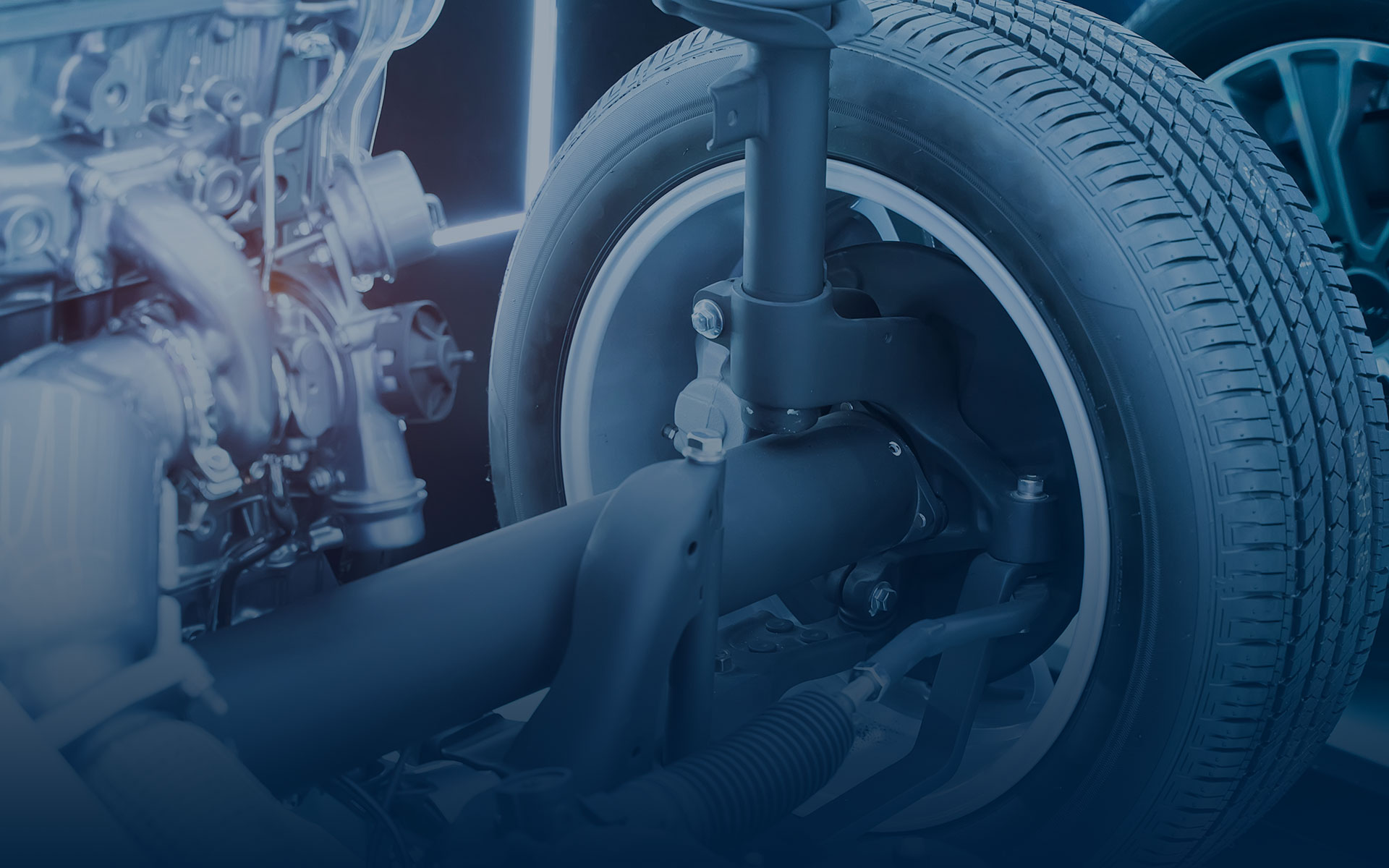
Metal stamped parts are widely used across the automotive and transportation industries. In fact, an estimated 70% of all structural vehicle components are produced using metal stamping and pressing. These components perform both structural and functional roles within vehicles and are engineered to withstand vibration, load, and temperature variations while maintaining shape and dimensional stability.
Electronics and electrical systems
Electronics and electrical systems rely on stamped parts for connectors, shielding components, and small formed pressings. Sheet metal stamping enables the production of thin, accurately formed parts in materials such as copper alloys and stainless steel, supporting reliable electrical performance and clean assembly.
Industrial and consumer products
Across industrial machinery and consumer products, metal stamping supports housings, hardware, fasteners, and internal mechanisms. Components such as wave washers, disc springs, and strip springs control force, preload, and movement within compact assemblies.
Materials used in metal stamping
In metal stamping, the raw material impacts formability, tool life, and component performance, so choosing the right one is essential.
Carbon steel and alloy steel
Carbon steel and alloy steel are strong, durable, and cost-efficient, and are widely used for stamped components subjected to repeated mechanical loads.
Stainless steel
Stainless steel is often selected for applications that require corrosion resistance and long-term durability. Although more demanding to form, it performs well in pressings exposed to moisture, chemicals, or temperature variation.
Copper and brass
Copper and brass offer excellent electrical conductivity and good formability. These materials are commonly used for stamped components in electrical and electronic systems.
Aluminium
Aluminum is lightweight and corrosion-resistant, making it well-suited for metal parts where weight reduction is important without compromising strength.
Benefits of metal stamping
With a proven balance of dimensional accuracy, production speed, and cost efficiency, metal stamping offers clear manufacturing benefits.
High repeatability
Metal stamping and pressing delivers high repeatability across large production volumes. Once tooling and die forms are established, stamped parts maintain consistent geometry from part to part, supporting stable assembly processes and predictable performance.
Complex forms at speed
Metal stamping produces complex forms quickly. Multislide pressings, progressive die stamping, and combined forming operations mean intricate shapes can be manufactured efficiently within a single production cycle.
Cost efficiency for medium to high volumes
For medium- to high-volume production, the upfront tooling investment for metal stamping delivers long-term value. Fast cycle times and reduced per-part costs make pressing a cost-effective solution over the full production lifecycle.
Reliable tolerances
Metal stamping supports reliable tolerances across extended production runs. This consistency reduces the need for downstream adjustment and inspection, improving overall manufacturing efficiency and finished product quality.
Metal stamping for spring and wire form assemblies
Stamped components frequently work alongside springs and wire forms within mechanical systems. In these assemblies, pressings provide structure, alignment, and retention, while springs deliver controlled force and movement.
Stamped components for spring mechanisms
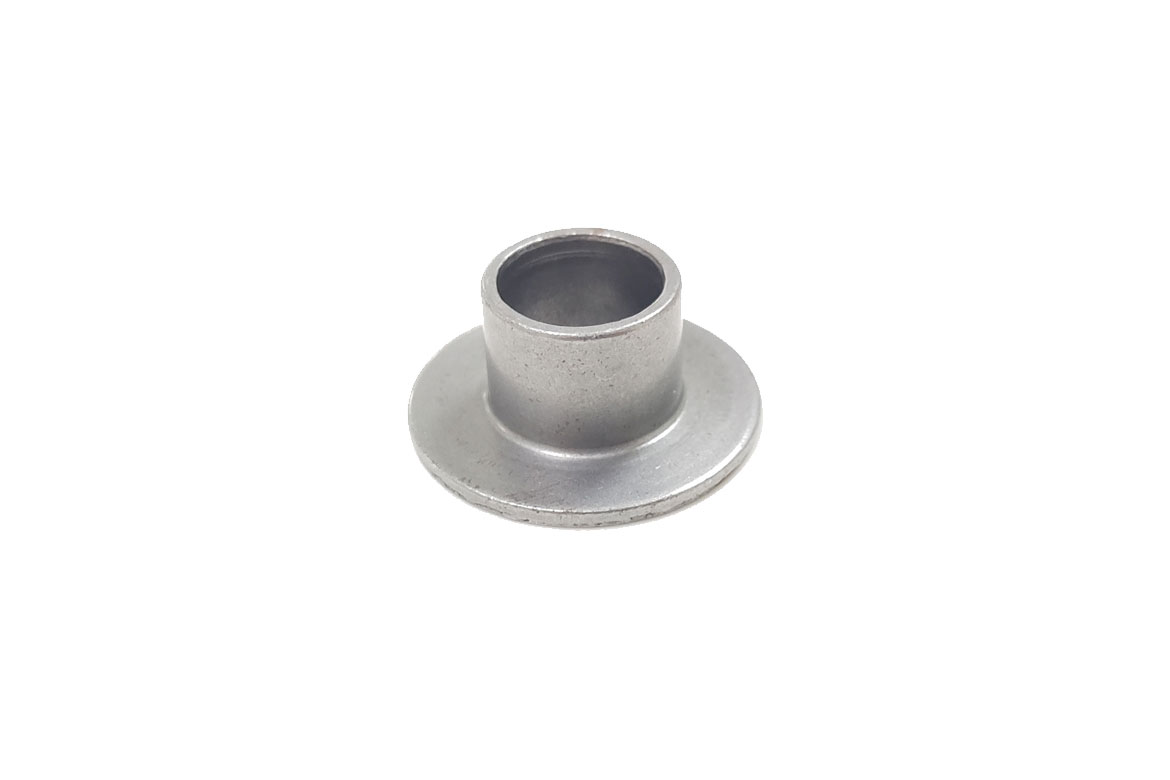
Typical pressings used with spring mechanisms include brackets, housings, retainers, bushings, and locking rings. These components control spring position and load transfer, which directly influence performance and durability.
How stamped parts improve product function
Well-designed, precision-engineered metal stamped parts lead to a secure fit, reduced assembly time, and improved alignment. Pressings such as disc springs and wave washers deliver controlled axial force within compact spaces, while strip springs combine stamping and forming to achieve consistent deflection behavior. Together, these elements support predictable system performance.
When to choose stamping vs alternatives
Stamping is often compared with machining, wire forming, and laser cutting.
- Machining suits low volumes or variable designs, while stamping excels in repeatable production.
- Wire forming supports three-dimensional profiles, whereas stamping is better suited to flat or contoured components.
- Laser cutting offers flexibility for short runs, but stamping provides speed and consistency at scale.
How to choose a metal stamping supplier
When choosing a metal stamping supplier, it’s important to evaluate more than press capacity. Experience with complex geometries, progressive and multislide tooling, and a broad range of materials is essential, as is the ability to move efficiently from prototype to volume production.
Quality certifications and compliance with industry standards also matter. They demonstrate manufacturing discipline and process control, helping ensure consistent stamped components across the full product lifecycle.
Lesjöfors’ approach to custom metal stamping and pressing
Lesjöfors brings decades of manufacturing heritage to metal stamping, producing millions of high-quality pressings and stamped parts each year across a global network of facilities. With high-precision presses, advanced tooling expertise and deep material knowledge, we manufacture consistent components in a wide range of geometries, materials, and production volumes.
Integrated manufacturing for complete assemblies
By combining pressings with springs, wire forms, and flat strip components, Lesjöfors supports complete assemblies rather than individual parts. This integrated approach reduces supply chain complexity, improves component compatibility, and supports consistent system performance.
Quality and testing standards
Every pressing is manufactured under controlled conditions, with dimensional verification and in-process checks supporting consistent output. Vision systems, in-house toolmaking, and defined quality controls help maintain tight tolerances across production runs.
Engineering support for complex designs
Lesjöfors engineers support feasibility reviews, design optimization, and problem-solving throughout development. From multislide pressing concepts to deep draw stamping, engineering collaboration helps ensure each pressing meets the functional and production requirements.
Order custom-stamped components today
Metal stamping and pressing remains one of the most efficient and reliable metal forming processes available. When combined with spring and wire-form expertise, it supports complete, high-performance assemblies built for long-term use.
Contact Lesjöfors to explore custom pressings, integrated spring-plus-stamping solutions, or engineering support and move your next design forward with confidence.
FAQs
Metal stamping shapes flat metal sheets into set forms. A press and custom tools cut, bend, or pierce the material. The method supports fast production for accurate parts used across many sectors.
A stamping press pushes a tool into sheet metal. The tool forms the metal into the required shape. Each stroke repeats the same motion, which keeps output steady and predictable.
Stamping creates clips, brackets, fasteners, housings, connectors, and many flat or formed components. These parts appear in automotive systems, electronics, appliances, and industrial products.
Steel, stainless steel, aluminium, copper, and brass each suit stamping. These metals offer good strength, formability, or corrosion resistance, which supports reliable results across many designs.
Progressive dies shape metal through several steps in one tool. Each station forms part of the final shape. The strip moves through the tool, and each stroke delivers a finished piece.